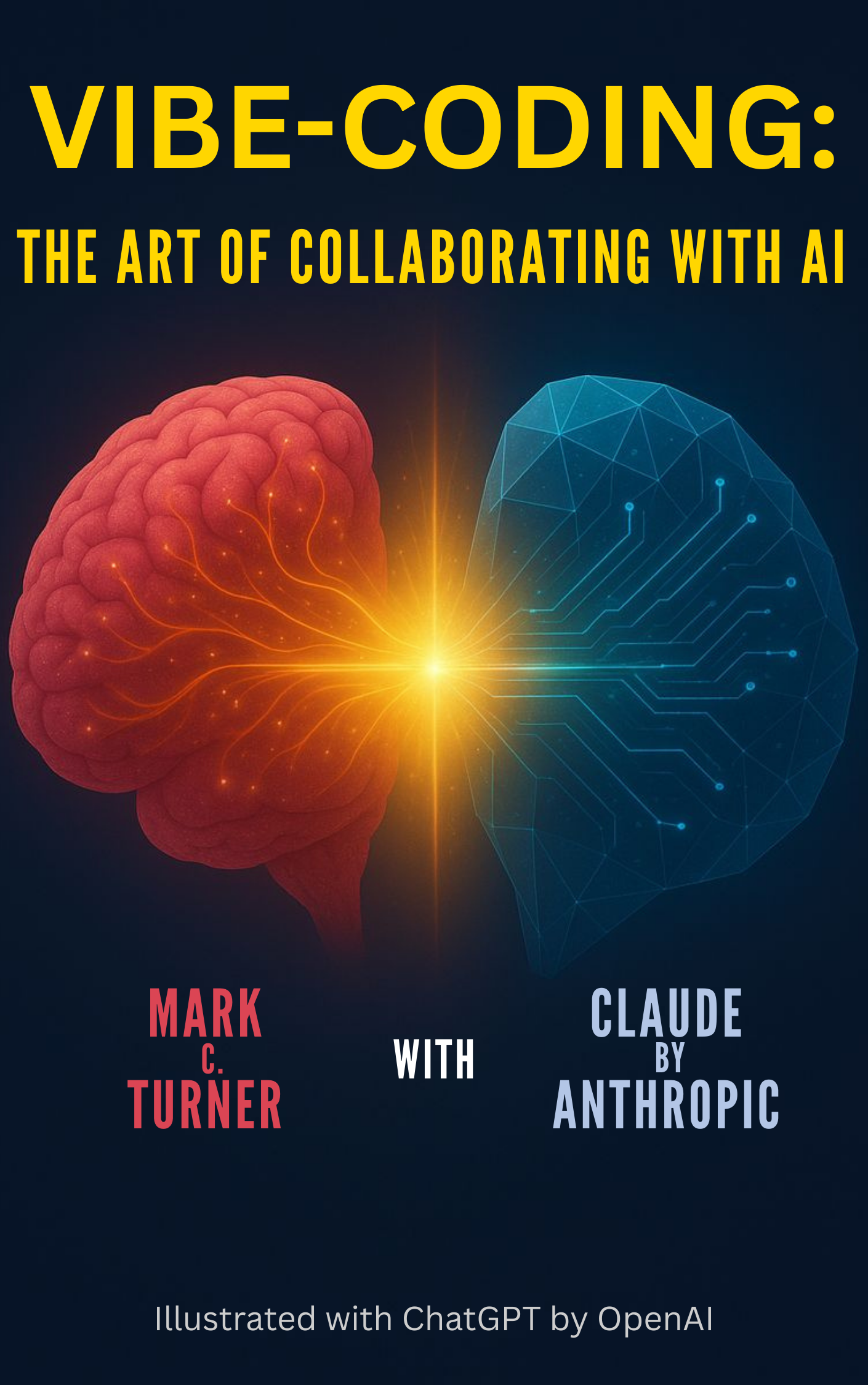
From the book Vibe-Coding: The Art of Collaborating with AI

The ICE Framework Intent · Constraints · Expectations

A structured approach to human-AI collaboration
that produces better results, first time.

Learn the Framework

The Problem

Most poor AI results stem from unclear requests, not AI limitations.

Vague inputs produce vague outputs.

The AI cannot read your mind. It cannot infer unstated requirements. It cannot know what "good" looks like unless you tell it. The bottleneck is not the AI's capability — it's your ability to articulate what you want.

ICE provides a structure for that articulation.

The Framework

ICE structures the planning conversation that precedes implementation. It's not a prompt template — it's a framework for dialogue.

I

Intent

What you want to achieve and why

Surfaces: Purpose, context, user situation

C

Constraints

Boundaries and requirements

Surfaces: Technical limits, business rules, design principles

E

Expectations

How you will verify success

Surfaces: Acceptance criteria, what "right" looks like

I

Intent: What You Want to Achieve

Intent is the outcome you're trying to accomplish, including the context that makes it meaningful.

Without intent

"Add a button to the page."

With intent

"Users need to reach their settings quickly without losing their place — they're often mid-task and can't afford to navigate away. Something always visible that says 'your preferences are here.'"

Intent tells why, not just what. This gives the AI information to make good implementation decisions.

Questions to surface intent:

  • What problem does this solve?
  • Who will use this, and in what situation?
  • What happens if we don't build this?
  • What does success look like for the user?
C

Constraints: The Boundaries

Constraints narrow the solution space. They have dual nature:

Restrictive

Prevents unwanted solutions

Generative

Forces discovery of opportunities within the fence

You don't need technical vocabulary. Express what matters:

  • "My users often work with unreliable internet — can this work offline?"
  • "Only paying customers should see this feature."
  • "It needs to feel instant — I don't want users waiting around."

Questions to surface constraints:

  • What technical limitations exist?
  • What business rules must be respected?
  • What can we NOT do?
  • What resources (time, budget, expertise) are limited?
  • What security or privacy requirements apply?
E

Expectations: How You'll Know It's Right

Expectations are how you'll verify success — what you'll look for when you test it.

"I'll know it's working when I can click the icon, see my settings, change something, and find that change still there tomorrow."

The discipline: Force yourself to describe what success looks like before building.

Technique: Ask the AI to wireframe the interface before building. Wireframing surfaces expectations you didn't know you had.

Questions to surface expectations:

  • What will the user see/experience when this works correctly?
  • What should happen when things go wrong?
  • How will we test this?
  • What edge cases might exist?

The Critical Persona Step

AI systems are trained to be helpful and agreeable. This creates sycophancy bias — the AI wants to build what you asked for, even if what you asked for has flaws.

The solution: after completing ICE, ask the AI to adopt a critical persona that actively looks for problems.

"Now review this plan as a [critical persona]. What have we missed? What could go wrong? What assumptions are we making that might be wrong?"

Sceptical User

UX problems, confusing flows

Security Auditor

Vulnerabilities, data exposure

Hostile Critic

Weak arguments, unstated assumptions

Edge Case Tester

Failure modes, unusual inputs

Cost Accountant

Hidden expenses, scope creep

Maintenance Developer

Code that will be hard to change

The AI shifts from "how do I build this?" to "what's wrong with this?" — surfacing considerations that agreeable mode would miss.

Key Principles

Dialogue, Not Instruction

Effective interloquial communication is two-way. Ask the AI to question you. Meaning emerges through exchange.

Precision Over Warmth

AI partners do not reward warmth. They reward precision. Build clarity, not rapport.

Trust Through Verification

AI confidence doesn't correlate with accuracy. Verify independently, especially for high-stakes decisions.

Expression AND Interpretation

Can you recognise when AI output has subtle flaws? Interloquial competence requires both directions.

The Process

1

Express Intent

State what and why

2

Invite Questions

"What do you need to know?"

3

Articulate Constraints

Boundaries and limits

4

Define Expectations

What success looks like

5

Critical Review

"Review as a sceptical [persona]"

6

Capture Blueprint

Document before building

7

Implement

Build from the blueprint

8

Verify

Check output against expectations

Get the Tools

Download the complete ICE toolkit: comprehensive reference guide, ready-to-use system prompts for any AI platform, and conversation starters you can use immediately.

The toolkit includes:

  • INTERLOQUIAL-ICE.pdf — Complete framework reference as a printable PDF
  • INTERLOQUIAL-ICE.md — Same content in Markdown for easy editing
  • System Prompts — Three sizes for different platforms (ChatGPT, Claude, Gemini, etc.)
  • Claude Code Skill — For Claude Code users: invoke with /ice
  • Conversation Starter — Generic version to paste into any AI chat

Enter your email to download the toolkit and receive occasional updates on interloquial practice.

Vibe-Coding: The Art of Collaborating with AI - Book Cover

Go Deeper

The ICE framework is one piece of a larger methodology. Vibe-Coding: The Art of Collaborating with AI covers:

  • The full interloquial communication framework
  • Three years of real project case studies
  • Risk-aware approach to AI collaboration
  • Psychological guardrails and healthy practices
  • From idea to production — the complete journey
Join the Waitlist