A new kind of communication is emerging

Vibe-Coding The Art of Collaborating with AI

You don't need to be a programmer. You need to be precise.
The skill has a name. It can be learned.

Coming Soon

Be the First to Know

The Discovery

In December 2025, a fully functional SaaS platform launched to market. It processes payments, manages user accounts, serves thousands of lines of interactive code, and runs on Microsoft Azure's cloud infrastructure.

The person who built it is not a professional developer. What he does have is three years of intensive experience collaborating with AI, and a communication skill he's been refining since 1982—long before AI existed.

Yet here it is. Working. Live. Serving paying customers.

The secret wasn't the AI tools—everyone has access to those. It was the ability to articulate exactly what he wanted, so clearly that AI could build it.

That skill has a name.

There's a word for this skill. It's always existed, waiting to be named.

Interloquial

/ˌɪntərˈloʊkwiəl/

adjective

Relating to the clear exchange of intent, constraints, and expectations between different kinds of collaborators, especially across human-machine interfaces.

Just as interpersonal skills help us connect with other people, interloquial skills help us communicate across different forms of intelligence.

It's not about prompts. It's not about syntax. It's about learning to think together through dialogue, feedback, and mutual adaptation.

The skill applies wherever AI can generate output: software, writing, design, research, education. The medium differs; the method remains constant.

Mastering this skill means fewer wasted iterations, less environmental impact, and higher quality results. Precision isn't just effective—it's responsible.

When you can articulate what you want with precision, the implementing partner—human or AI—can create it.

From Frustration to Flow

Without the Skill

  • Endless prompt rewrites
  • Inconsistent, unpredictable results
  • Fighting the AI instead of collaborating
  • "It doesn't understand what I want"
vs

With Interloquial Skills

  • Clear intent, first time
  • Predictable, quality output
  • Genuine partnership and flow
  • "It builds exactly what I described"

The difference isn't the AI model you use. It's how you communicate with it.

Interloquial skills turn the frustrating guessing game into a productive dialogue. You stop wrestling with prompts and start thinking together.

The author used these skills to build LockedPillar—a commercial SaaS platform—without being a professional developer. But the real proof is in how the skill transforms every AI interaction, not just software.

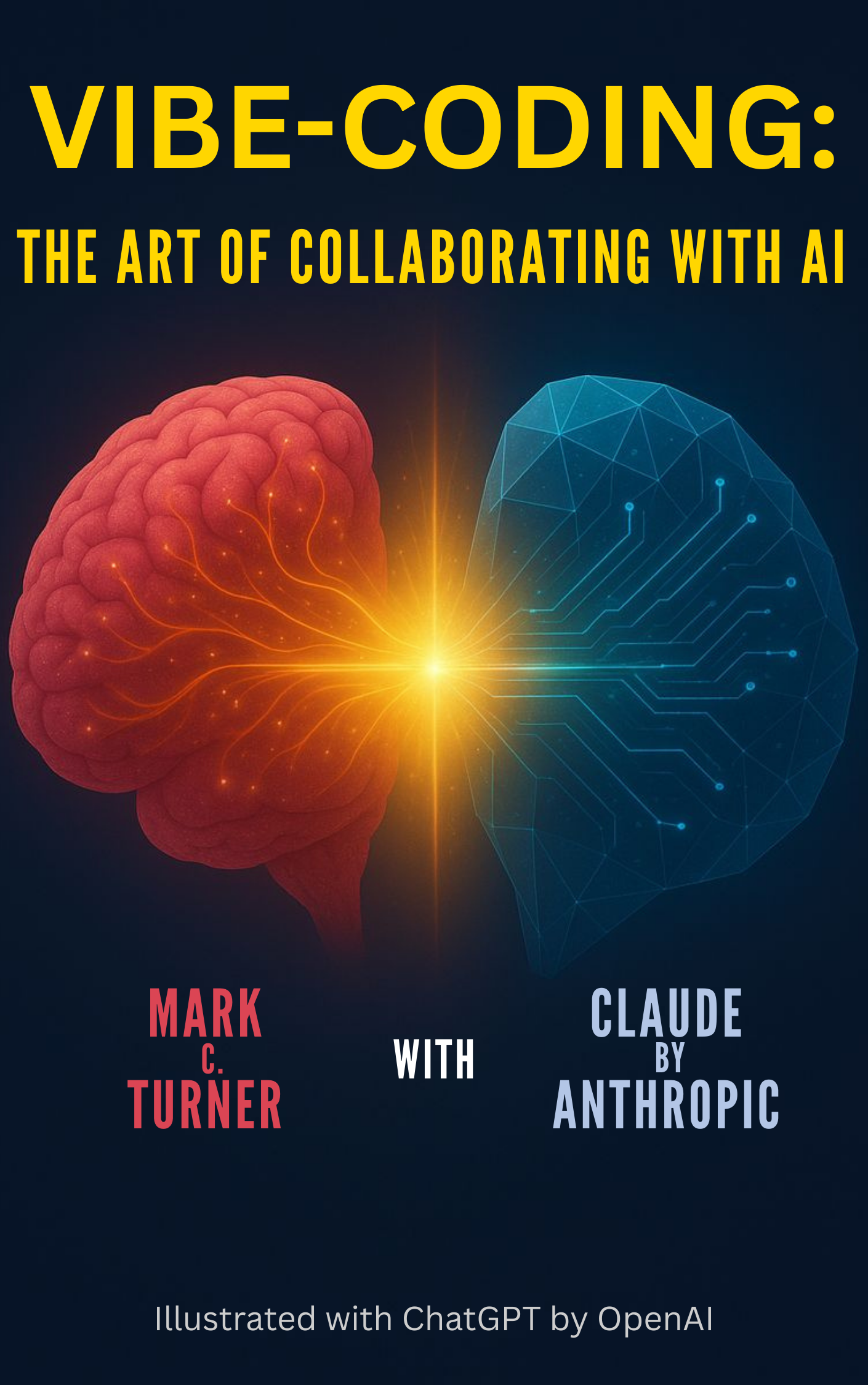
Vibe-Coding: The Art of Collaborating with AI - Book Cover

The Book

This isn't a book about AI tools. It's a book about a skill—one that existed before AI, transferred directly to AI collaboration, and will remain valuable regardless of how the tools evolve. Written by a risk professional, it's the first book to honestly address both the opportunities and the hazards.

The tools will change. The skill endures.

  • Understand interloquial communication as an emerging field
  • Learn from three years of real projects and hard-won lessons
  • Develop a risk-aware approach to AI collaboration
  • Protect yourself from psychological, operational, and business hazards
  • Apply the skill to any creative domain—not just software

By Mark C. Turner MSc (Risk), BSc (Technology), CFIRM
Certified risk professional. Author of the IRM Digital Ethics Guidelines. Founder of Emsity Ltd.

Join the Waitlist

Be the first to know when the book launches. Plus, get exclusive insights on interloquial skills before anyone else.

No spam. Just the journey from idea to launch.

Go Deeper

The book is the beginning. For those who want hands-on guidance, personalized instruction is available.

Interested in training or speaking engagements?

Get in Touch

Frequently Asked Questions

What is vibe coding?

Vibe coding is a methodology for building software through collaborative dialogue with AI. Instead of writing code line by line, you articulate your intent clearly and work with AI as a genuine partner to create production-ready software. It's how one person built a complete SaaS platform from 51 essential files in 11 weeks.

What is interloquial communication?

Interloquial communication is the skill of clearly exchanging intent, constraints, and expectations between different kinds of collaborators—especially humans and AI. Just as interpersonal skills help you connect with people, interloquial skills help you communicate effectively with artificial intelligence.

Do I need to be a programmer?

No. The author is not a professional developer, yet built a complete commercial SaaS platform using vibe-coding techniques. More importantly, the same interloquial skills apply to any domain where AI generates output—writing, research, design, education. If you can articulate what you want with precision, you can vibe-code.

What are the risks of vibe-coding?

Like any powerful technology, vibe-coding carries real risks—psychological, operational, and business. This book is unique in addressing them honestly, written by a Certified Fellow of the Institute of Risk Management who authored their digital ethics guidelines. You'll learn to harness the power while protecting yourself from the hazards.

How is this different from prompt engineering?

Prompt engineering focuses on crafting individual queries to get better responses. Interloquial communication is broader—it's about sustained collaboration, iterative dialogue, and building complex outcomes through ongoing conversation. It's the difference between asking questions and thinking together.